


GMC Towing Capacity Guide: Sierra, Yukon, Canyon & Acadia
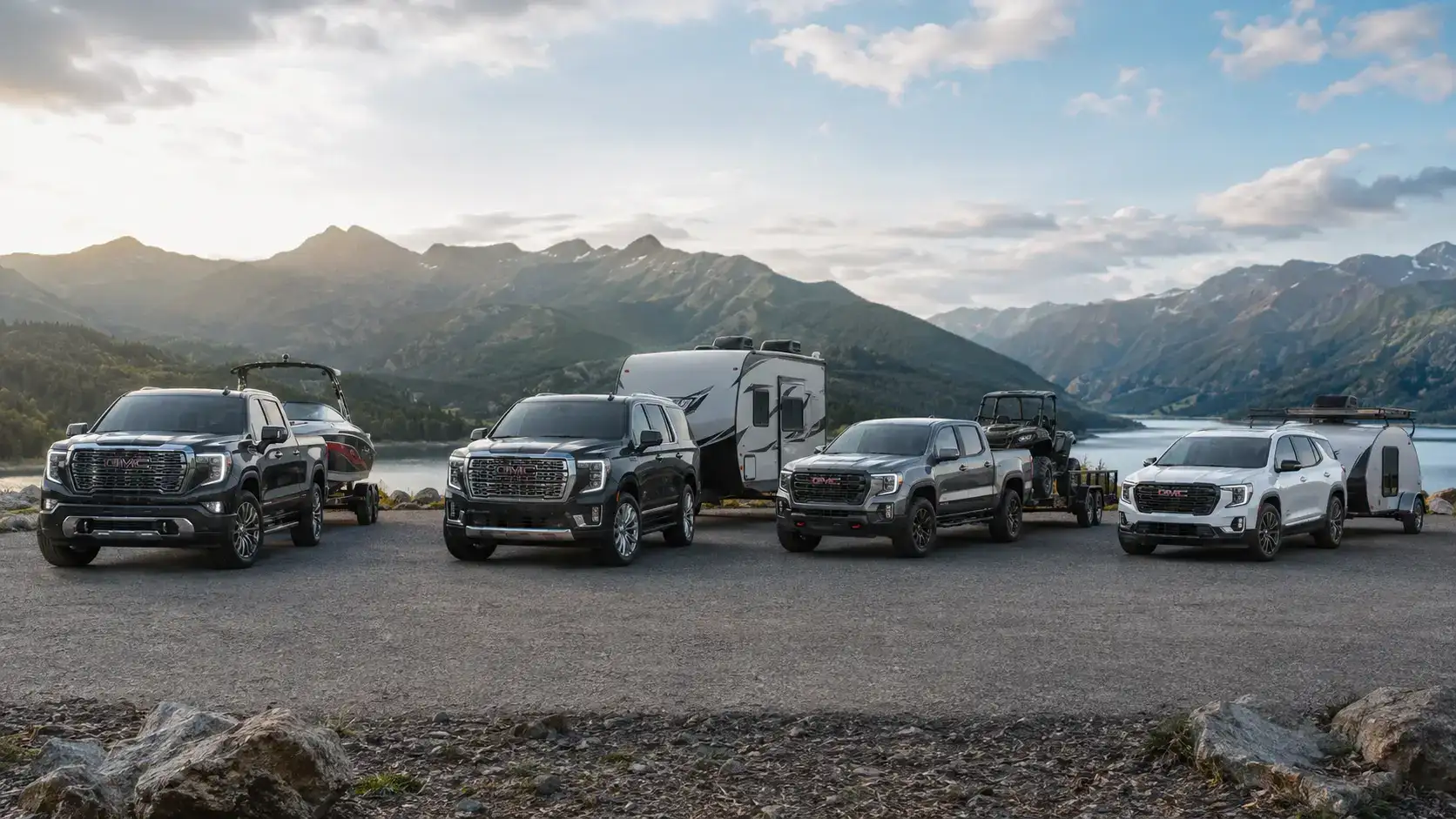
Towing capacity is the single specification that most directly determines whether a specific GMC is capable of pulling the specific load you need to move. It is also one of the most frequently misunderstood specifications in vehicle shopping, buyers regularly compare maximum towing ratings between vehicles without accounting for the configuration differences (engine, drivetrain, package) that produce those ratings, or the difference between what a vehicle is rated for and what it should comfortably tow in Florida’s specific conditions. This guide gives you the verified maximum towing for every 2026 GMC model in the most common configurations, the practical guidance for matching tow ratings to your actual use case, and the Florida-specific factors that affect real-world towing performance.
At Starling GMC St. Cloud, towing capability is the most common first question from Central Florida buyers, Osceola County’s lakes, the Space Coast’s boat launches, and the area’s recreational use of I-4 and the Turnpike make towing a weekly reality for many of our customers.
GMC Towing Capacity Master Table (2026 Models)
The table below shows maximum towing for each GMC model in the most common configurations. All figures are approximate maximums requiring the corresponding engine, drivetrain, and trailer package, confirm the specific vehicle’s door-jamb sticker for the exact rating of that unit.
|
Model |
Engine | Drivetrain | Max Towing | Notes |
| Terrain | 1.5L Turbo I4 | AWD / 8-speed | 1,500 lbs |
FWD (2026): 800 lbs. 2027 FWD expected 1,500 lbs with 8-speed |
| 2.5L Turbo I4 | FWD or AWD | 5,000 lbs | With available trailer package; same for FWD and AWD | |
| Yukon / Yukon XL | 5.3L V8 | 2WD | 8,400 lbs |
Max Trailering Package required |
|
Yukon / Yukon XL |
6.2L V8 | 2WD | 8,400 lbs | Same ceiling; more power reserve |
| Yukon / Yukon XL | 3.0L Duramax | 2WD | 8,200 lbs |
Better fuel economy under load |
| 2.7L TurboMax | 2WD | 7,700 lbs | Segment-leading; AT4X approximately 6,000 lbs (added weight) | |
| Sierra 1500 | 2.7L TurboMax | 2WD | 9,400 lbs |
With Max Trailering Package |
|
Sierra 1500 |
5.3L V8 | 2WD | 11,200 lbs | With Max Trailering Package |
| Sierra 1500 | 6.2L V8 | 2WD | 13,100 lbs |
With Max Trailering Package |
|
Sierra 1500 |
3.0L Duramax | 2WD | 13,300 lbs | Segment-leading half-ton diesel tow rating |
| Sierra 2500HD | 6.6L Gas V8 | 2WD | ~14,500 lbs |
Conventional; Duramax significantly higher |
|
Sierra 2500HD |
6.6L Duramax | 2WD | ~18,500 lbs | Conventional max; gooseneck-capable platform |
| Sierra 3500HD | 6.6L Duramax | DRW | 36,000 lbs |
Gooseneck configuration; highest in segment |
|
Sierra EV |
Elevation/Denali electric | AWD | 12,500 lbs | Best-in-class EV truck towing; AT4: 12,300 lbs |
| Hummer EV Pickup | Electric (3-motor) | AWD | N/A rated |
No rated conventional towing |
What Towing Capacity Really Means
Towing capacity ratings are the maximum the vehicle can safely pull under ideal conditions, the trailer properly loaded with the tongue weight at 10-15 percent of trailer weight, the vehicle equipped with the specific package that produces the rating, and conditions that do not impose additional thermal or mechanical stress on the towing system. The rated maximum is not the recommended everyday tow weight.
The 80 Percent Rule and Why It Matters in Florida
The automotive towing industry’s generally accepted best practice: do not exceed 80 percent of the vehicle’s maximum tow rating for routine use. This 20 percent reserve accounts for the dynamic forces that steady-state towing creates, aerodynamic sway at highway speed, brake heating during deceleration, and the additional load that Florida’s specific conditions impose. An Acadia rated at 5,000 lbs maximum should routinely tow loads up to 4,000 lbs. A Sierra 1500 rated at 11,200 lbs should routinely tow loads up to 8,960 lbs. Florida-specific factors that amplify the importance of this reserve: summer ambient temperatures of 90-95 degrees reduce the cooling headroom of the engine, transmission, and brake system during sustained towing, requiring more thermal margin to avoid component stress. The 80 percent rule is not law, it is engineering conservatism that pays off over the vehicle’s ownership life in reduced drivetrain wear.
What Can Each GMC Tow? (Practical Boat and Trailer Guide)
The most practical use of towing ratings is matching them to specific loads, the boats, campers, and trailers that Osceola County and Central Florida buyers actually tow to the area’s recreational destinations.
Personal Watercraft (PWC): Terrain or Acadia
A single personal watercraft (jet ski) on a standard trailer weighs approximately 900-1,400 lbs fully loaded. The 2026 Terrain AWD at 1,500 lbs covers one PWC comfortably. The 2027 Terrain FWD is expected to cover the same at 1,500 lbs. Two PWC trailers and tandem configurations can reach 2,200-3,000 lbs, the Acadia’s 5,000 lb rating handles this with significant reserve. Any GMC above the Terrain comfortably handles single or double PWC trailer configurations.
Small to Mid-Size Boats: Canyon or Acadia
A 17-foot aluminum bass boat on a trailer weighs approximately 2,000-2,800 lbs. A 19-21 foot fiberglass bass boat: approximately 3,000-4,000 lbs. A 20-22 foot pontoon: approximately 3,500-5,000 lbs. The Canyon’s 7,700 lb and the Acadia’s 5,000 lb ratings cover most of this range. For Osceola County bass boats heading to Lake Tohopekaliga or East Lake Toho, the Canyon or Acadia is the appropriate vehicle. For larger pontoons approaching the 5,000 lb ceiling, the Sierra 1500 or Yukon provides more comfortable reserve.
Large Boats and Center Consoles: Sierra 1500 or Yukon
A 24-26 foot center console on a trailer typically weighs 5,000-8,000 lbs. A 28-foot offshore boat: 8,000-12,000 lbs. These loads require the Sierra 1500’s capability range (up to 13,300 lbs Duramax) or the Yukon’s 8,400 lb ceiling. The Acadia and Canyon are not the correct vehicles for boats in this range at their maximum configurations. For Space Coast buyers who keep boats at Mosquito Lagoon or Indian River Lagoon launches, the specific boat weight and trailer combination should be measured and matched against the vehicle’s rated capacity before purchase.
Travel Trailers and Campers
Ultralight travel trailers (under 3,500 lbs GVWR): Canyon or Acadia. Mid-size travel trailers (3,500-7,000 lbs): Canyon or Sierra 1500. Full-size travel trailers (7,000-12,000 lbs): Sierra 1500 with appropriate engine. Fifth-wheel campers (12,000-20,000 lbs): Sierra 1500 Duramax or Sierra 2500HD. Luxury fifth-wheels above 20,000 lbs: Sierra 3500HD. Always verify the trailer’s GVWR (Gross Vehicle Weight Rating), the fully loaded maximum weight, not the trailer’s dry weight, when comparing against tow ratings.
GVWR, GCWR and Payload: Understanding All Three Numbers
Three weight ratings define the full capability picture for any GMC towing application, and understanding all three prevents the single most common towing mistake, choosing a vehicle based on maximum tow rating alone without checking that the combined system weights stay within the Gross Combined Weight Rating.
How GCWR Limits What You Can Actually Tow
GVWR (Gross Vehicle Weight Rating): the maximum weight of the fully loaded vehicle itself, passengers, cargo, fuel, and the vehicle’s curb weight combined. A Sierra 1500 Crew Cab 4WD has a GVWR of approximately 7,200 lbs. GCWR (Gross Combined Weight Rating): the maximum weight of the fully loaded tow vehicle plus the fully loaded trailer combined. A Sierra 1500 with the Duramax has a GCWR of approximately 19,800 lbs. Maximum Trailer Weight: GCWR minus the actual loaded vehicle weight. If the Sierra 1500 is loaded with 5,200 lbs (within its GVWR) and the GCWR is 19,800 lbs, maximum trailer weight is 14,600 lbs, slightly above the 13,300 lb maximum tow rating, meaning the tow rating is the binding constraint in this case. Payload: the maximum additional weight the vehicle can carry in passengers and cargo above its curb weight. Tongue weight (10-15 percent of trailer weight) counts against payload, a 10,000 lb trailer’s 1,000-1,500 lb tongue weight reduces the payload available for passengers and bed cargo by that amount. Matching all three numbers, GVWR, GCWR, and payload, to the actual loaded weights of the vehicle and trailer is the complete towing capacity analysis that the maximum tow rating alone does not provide.
Florida Towing Tips for GMC Owners
Central Florida’s climate and geography create specific towing considerations that northern market advice does not fully address. Heat management is the most important: summer ambient temperatures of 90-95 degrees reduce the thermal headroom that the engine, transmission, and brake system have before stress begins. Towing at or near maximum capacity on a 95-degree Florida summer day on I-4 places more thermal demand on the driveline than the same load in 70-degree ambient conditions.
Summer Heat, Boat Ramps and Interstate Towing on I-4
Practical Florida towing recommendations: check transmission fluid temperature through the infotainment system’s towing page if the vehicle offers it, sustained temperatures above the normal operating range indicate a need to reduce speed or pull off to allow cooling. Use Tow/Haul mode for all towing above 2,000 lbs, the mode’s shift pattern holds lower gears longer to use engine braking on deceleration rather than overloading the brakes, which is particularly important on the long I-4 exit ramps where deceleration from 70 MPH while loaded requires consistent brake performance. Boat ramp approach: engage 4WD before reaching the ramp surface, not after the vehicle is partially on the wet concrete, the initial engagement on a dry surface produces cleaner engagement than attempting to engage on the wet inclined surface where the launch vehicle’s tires are already under load.
Towing With Super Cruise: What GMC Buyers Should Know
Super Cruise on compatible GMC models, Sierra 1500, Sierra EV, Yukon, Canyon AT4, Canyon Denali, Acadia, is towing-compatible, meaning hands-free highway driving can be engaged on compatible roads with a supported trailer attached. This is a capability unique to GMC among full-size truck and SUV brands: no Ford F-150 with BlueCruise and no Ram 1500 with its equivalents offer hands-free driving with a trailer attached. The practical benefit for Central Florida buyers who make long towing runs on I-4 or the Turnpike, the specific routes that are Super Cruise compatible, is genuine hands-free towing management during the sustained highway segments that constitute most of a Central Florida-to-destination towing trip.
Frequently Asked Questions
The most common towing questions at Starling GMC St. Cloud.
How much can a GMC Yukon tow?
The 2026 GMC Yukon with the 5.3L or 6.2L V8 and the Max Trailering Package reaches 8,400 lbs maximum conventional towing. The 3.0L Duramax diesel reaches 8,200 lbs. The Yukon XL reaches the same maximums, the additional length does not affect towing ratings.
How much can a GMC Sierra 1500 tow?
The Sierra 1500 towing range spans 9,400 lbs (2.7L TurboMax with Max Trailering Package) to 13,300 lbs (3.0L Duramax with Max Trailering Package). The 5.3L V8 reaches 11,200 lbs; the 6.2L V8 reaches 13,100 lbs. The Max Trailering Package is required for all maximum ratings and includes the appropriate hitch receiver, wiring, and brake controller compatibility.
Can a GMC Acadia pull a boat?
Yes, the Acadia tows up to 5,000 lbs with the available trailer package, covering PWC trailers, bass boats up to approximately 19 feet, smaller pontoons, and light utility trailers. It does not cover center consoles or pontoons above approximately 5,000 lbs loaded. The trailer package (hitch receiver and wiring) must be specified when the vehicle is ordered or added through our service department.
Match Your GMC to Your Towing Need at Starling GMC St. Cloud
Our sales team at Starling GMC at 1001 E Highway 192 in St. Cloud can help you identify the specific GMC configuration that matches your exact towing load, not just the vehicle’s maximum rating but the complete picture of GVWR, GCWR, payload, and whether the Max Trailering Package is required for your specific application. Bring your boat’s specs, trailer GVWR, and typical passenger and cargo load to the conversation and we will identify the right vehicle with confidence. Visit us at 1001 E Highway 192 in St. Cloud.
Conclusion
GMC’s 2026 lineup spans towing capability from the Terrain’s 1,500 lb rating to the Sierra 3500HD’s 36,000 lb gooseneck maximum. Matching the vehicle to the load requires understanding the specific engine, drivetrain, and package required to achieve the maximum rating, and applying the 80 percent operating rule to identify the comfortable daily towing range within that maximum. Florida’s summer heat amplifies the importance of thermal margin in the selection; Super Cruise’s towing-compatible hands-free operation on I-4 and the Turnpike makes GMC’s towing-equipped vehicles uniquely capable on Central Florida’s specific highway network. Visit Starling GMC at 1001 E Highway 192 in St. Cloud to match your specific towing need to the right GMC configuration.
The most common towing mistake at purchase is choosing a vehicle based on maximum tow rating without accounting for the actual loaded trailer weight and the 80 percent operating rule. A buyer who selects an Acadia with a 5,000 lb maximum rating to tow a pontoon that weighs 4,800 lbs fully loaded is operating at 96 percent of rated maximum on every single tow, a configuration that works mechanically but produces more drivetrain heat, more wear, and less stability margin than the guideline recommends. The same buyer in a Sierra 1500 5.3L V8 with 11,200 lb maximum rating is at 43 percent of rated maximum on the same tow, a configuration that feels effortless and provides the safety margin that makes towing genuinely comfortable at highway speed.
The correct approach: identify the heaviest load you will tow with the trailer fully loaded and ready to travel, add 10 to 15 percent for tongue weight that counts against payload, and select a vehicle whose maximum tow rating is at least 25 percent above that total. For a 4,800 lb pontoon trailer: the minimum comfortable vehicle has a 6,000 lb rating. The Acadia covers it at 5,000 lbs but without the recommended margin. The Canyon at 7,700 lbs provides comfortable margin. The Sierra 1500 provides the most reserve in the half-ton class. This calculation, based on your specific trailer’s actual loaded GVWR, not its dry weight or the boat’s brochure weight, is what determines the right GMC for your situation. Our team at Starling GMC at 1001 E Highway 192 in St. Cloud can run this calculation for your exact trailer and annual towing pattern before any purchase is required.

0 comment(s) so far on GMC Towing Capacity Guide: Sierra, Yukon, Canyon & Acadia