


Service Tire Monitor System GMC: What It Means and How to Fix It
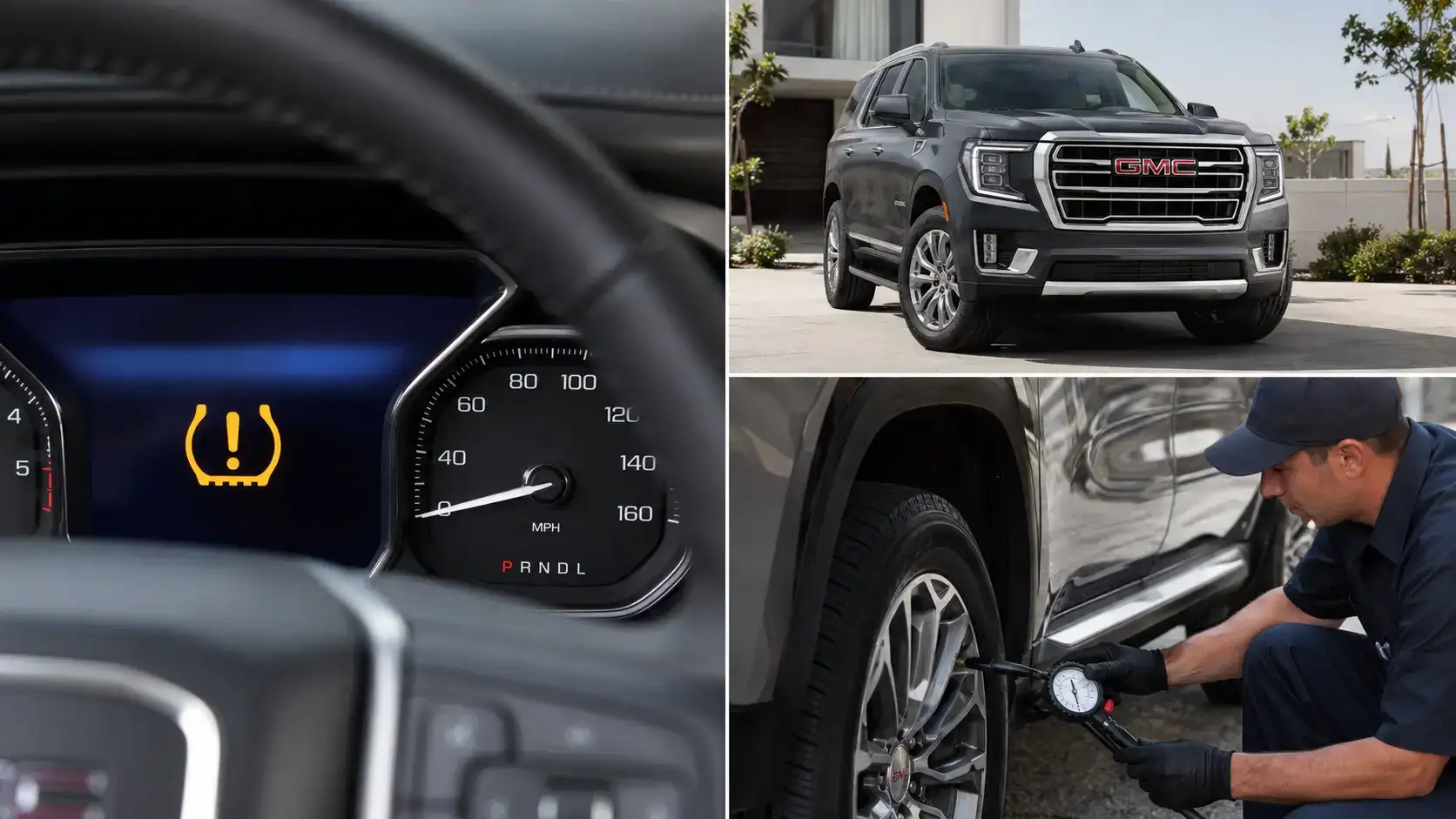
‘Service Tire Monitor System’ appears on your GMC‘s driver information center and produces an immediate reaction: something is wrong with the tires. The message is more nuanced than that. It does not necessarily mean your tires are flat or damaged, it means the tire pressure monitoring system (TPMS) itself has detected a condition it cannot resolve automatically, ranging from a tire with low pressure to a sensor whose battery has died to a system that lost its calibration during a tire rotation. Most ‘Service Tire Monitor System’ messages are resolved in 15 to 30 minutes without parts replacement. Some require a sensor replacement or professional reprogramming.
At Starling GMC in St. Cloud, our service department addresses TPMS concerns regularly and handles the full range from simple pressure adjustments to sensor replacement and module programming. This guide covers every cause of the message, the reset procedure, the Florida-specific temperature factors that make TPMS more active in Central Florida, and when the message requires professional service.
What Does “Service Tire Monitor System” Mean on a GMC?
The ‘Service Tire Monitor System’ message is different from the standard low tire pressure warning, the horseshoe-shaped icon with an exclamation point that illuminates when a tire drops below the threshold pressure. The standard low-pressure warning tells you a tire is low. The ‘Service Tire Monitor System’ message tells you the TPMS system itself has encountered a problem it cannot resolve, which may or may not be accompanied by a low-pressure condition.
Understanding this distinction is the first step in the correct response: a standard low-pressure icon means check and inflate the tires; a ‘Service Tire Monitor System’ message means the monitoring infrastructure has an issue that requires specific attention beyond simply inflating the tires.
How the TPMS (Tire Pressure Monitoring System) Works
Every 2026 GMC vehicle, and every vehicle sold in the United States since 2008 under federal mandate, is equipped with a Tire Pressure Monitoring System. Direct TPMS, which all current GMC vehicles use, places a battery-powered sensor inside each wheel assembly, typically mounted to the valve stem. Each sensor continuously measures the air pressure in that tire and broadcasts the reading via radio frequency to a receiver module in the vehicle. The receiver compares each tire’s reading to the vehicle’s specified pressure and triggers the low-pressure warning when any tire drops approximately 25 percent below the placard specification. The receiver also monitors sensor signal quality, battery status, and system integrity, and when any of these indicators fall outside normal parameters, it generates the ‘Service Tire Monitor System’ message.
Warning Light vs Warning Message: The Difference
GMC vehicles present two different TPMS alerts: the low-pressure warning light (the horseshoe icon) and the ‘Service Tire Monitor System’ message text. The horseshoe icon alone means one or more tires is below the 25 percent low-pressure threshold, adjust pressure and the light will extinguish within a few minutes of driving. The ‘Service Tire Monitor System’ text message means the system itself has a fault, not just a low tire. On some GMCs, both alerts appear simultaneously when a tire is severely low; on others, only the service message appears when a sensor issue is the cause without any pressure problem. Addressing only the tire pressure without resolving the sensor system concern will not clear the ‘Service Tire Monitor System’ message.
Why the Service Tire Monitor System Message Appears
Four causes account for the overwhelming majority of ‘Service Tire Monitor System’ messages on GMC vehicles. Understanding which cause is present determines the correct resolution and whether it is a DIY fix or a service appointment.
Low or Uneven Tire Pressure
The most common cause of TPMS alerts in Central Florida is seasonal or daily temperature-driven pressure variation. Tire pressure changes approximately 1 PSI for every 10 degrees Fahrenheit of temperature change, a meaningful effect in a market where morning temperatures of 70 degrees can produce afternoon ambient temperatures of 95 degrees. A tire that was correctly inflated to 35 PSI on a 75-degree morning may read 37-38 PSI on a 95-degree afternoon, and may return to 33-34 PSI overnight when temperatures drop. The TPMS system monitoring this variation may trigger a low-pressure warning or a system fault when pressure drops below threshold, even without any air loss from the tire. If your TPMS message appears seasonally (spring-to-summer transition or after a cold front) or in the morning after overnight temperature drops, pressure variation is the most likely cause. Check and correct all four tires to the specification on the door jamb sticker, not the maximum pressure on the tire sidewall.
Dead TPMS Sensor Battery
Each TPMS sensor contains a battery that powers the sensor’s pressure measurement and radio transmission functions. These batteries are sealed inside the sensor and not replaceable, when the battery dies, the entire sensor must be replaced. TPMS sensor batteries typically last 5 to 10 years depending on transmission frequency and temperature exposure. Florida’s heat accelerates battery discharge, and sensors on vehicles operated year-round in Central Florida’s summer conditions may reach battery depletion at the lower end of the expected lifespan. A sensor with a dead battery stops transmitting its pressure reading, which the receiver module interprets as a system fault and triggers the ‘Service Tire Monitor System’ message. A battery-dead sensor cannot be reset, it requires replacement. Sensor replacement costs approximately $50 to $100 per sensor in parts plus programming time, typically totaling $150 to $250 per sensor at a certified GMC service center.
Sensors Not Relearned After a Tire Rotation or Replacement
GMC’s TPMS system knows which sensor is at which wheel position. When tires are rotated, the sensors move to new positions but the receiver module still has them mapped to the old positions. The TPMS relearn procedure, a specific sequence of steps that tells the receiver module the new sensor positions, must be performed after every tire rotation, wheel swap, or sensor replacement. When this relearn procedure is not completed after a rotation, the receiver module’s sensor position map becomes incorrect, producing the ‘Service Tire Monitor System’ message even though all four sensors are functioning correctly and all four tires are at correct pressure. This is the most common dealer-induced TPMS concern: tires are rotated but the relearn procedure is not completed, and the vehicle leaves the service bay with a ‘Service Tire Monitor System’ message that was not present when it arrived. At Starling GMC’s service department, TPMS relearn is a standard part of every tire rotation procedure.
Damaged Sensor or Faulty Receiver Module
Physical damage to a TPMS sensor, from a pothole impact, from a curb strike that deforms the wheel, or from a tire mounting machine that contacts the sensor during installation, can render the sensor inoperable. A damaged sensor cannot be repaired; it requires replacement. In rare cases, the receiver module that processes sensor signals can develop a fault that produces the ‘Service Tire Monitor System’ message without any sensor issue. Receiver module faults typically produce error codes that our diagnostic equipment reads precisely, identifying whether the fault is in a specific sensor or in the receiver module itself. Receiver module replacement is less common and more expensive than sensor replacement; a diagnostic scan at our service department confirms which component is at fault before any parts are ordered.
Is It Safe to Drive With the Service Tire Monitor System Warning?
The safety answer depends on what is causing the message. If the message is accompanied by a low-pressure warning or if you can feel the handling change that indicates a significantly low or flat tire, do not continue driving, find a safe location to inspect the tires visually and inflate any low ones before proceeding. If the message appears without any handling change, without the low-pressure horseshoe icon, and all four tires appear visually normal and inflate to correct pressure when checked, the underlying cause is likely a sensor or system issue rather than a tire pressure emergency. In this scenario, the vehicle is safe to drive to a service appointment.
Safety, Fuel Economy and Tire Wear Consequences
A tire that is genuinely low, not just a sensor issue, creates three specific problems beyond the safety concern: reduced fuel economy from increased rolling resistance (approximately 0.2 percent per PSI below specification across all tires); accelerated and irregular tire wear on the low tire’s shoulder edges where the underinflated tire contacts the road; and heat buildup in the sidewall from the increased flexing of an underinflated tire at highway speed, which is the primary cause of blowouts from underinflation. None of these consequences is immediate enough to make continuing to drive dangerous in a non-emergency underinflation situation, but all of them accumulate meaningfully over days or weeks of driving on an underinflated tire. Checking and correcting tire pressure as soon as a TPMS warning appears is the appropriate response regardless of how the vehicle feels.
How to Reset the Tire Pressure Sensor on a GMC
Resetting the TPMS system correctly depends on the underlying cause. The reset procedure is different for a pressure adjustment (simplest), a relearn after rotation (moderate), and a sensor replacement (requires professional programming on current GMC models). Attempting the wrong reset procedure wastes time and may not resolve the underlying concern.
Step 1: Check and Correct Tire Pressure on All Four Tires
Before attempting any reset procedure, check and correct all four tire pressures to the specification on the driver’s door jamb placard. Do not use the maximum pressure number on the tire sidewall, that is the tire’s maximum safe inflation limit, not the vehicle’s recommended operating pressure. The door jamb placard shows the vehicle manufacturer’s recommended pressure for the specific tire size installed. Check pressure cold, before the first drive of the day or after at least 3 hours of parking, when the tire temperature has equilibrated to ambient. Pressure checked immediately after driving reflects heat-elevated pressure, not the cold inflation baseline the placard specifies. Once all four tires are at the specified pressure, drive the vehicle for 10 to 15 minutes at above 15 MPH, this gives the TPMS sensors time to transmit updated readings to the receiver module. The low-pressure warning icon, if lit, may extinguish automatically. The ‘Service Tire Monitor System’ message may or may not clear depending on whether pressure was the underlying cause or whether a sensor or system issue is also present.
Step 2: Run the TPMS Relearn Procedure
If the ‘Service Tire Monitor System’ message persists after all four tires are at correct pressure, a TPMS relearn procedure teaches the receiver module the current sensor positions. The manual relearn procedure on most current Sierra, Yukon, Terrain, Acadia, and Canyon models requires a TPMS relearn tool, a handheld device that activates each sensor in sequence while the receiver module records the position. Start with the driver’s front tire, hold the tool against the tire sidewall near the valve stem, press the activation button, and wait for the vehicle to horn-chirp once confirming that sensor has been registered. Repeat counterclockwise: driver’s front, driver’s rear, passenger’s rear, passenger’s front. After all four sensors are registered, horn-chirps twice confirming the relearn is complete. Drive the vehicle for 10 minutes to allow the system to update.
Step 3: Sierra, Yukon, Terrain, Acadia and Canyon Model Notes
Different GMC models have slightly different TPMS relearn procedures. The Sierra 1500 and Sierra HD typically use the horn-chirp confirmation relearn described above and require a TPMS relearn tool for the standard procedure. The Yukon and Yukon XL use the same tool-based procedure with the same counterclockwise sensor activation sequence. The Terrain and Acadia may offer a menu-driven relearn accessible through the infotainment touchscreen under Vehicle Settings, check the specific model year’s owner’s manual for the available relearn methods. The Canyon uses the same tool-based approach as the Sierra. Current model year GMC vehicles do not support the old auto-relearn method (driving above 15 MPH for 20 minutes with pressure corrected) for post-rotation relearns, a tool or professional programming is required.
When a Reset Won’t Work
If a correct pressure adjustment and a proper relearn procedure do not clear the ‘Service Tire Monitor System’ message, the cause is likely a dead sensor battery, a damaged sensor, or a receiver module fault, none of which are resolvable with pressure adjustment or relearn. At this point, a diagnostic scan at a certified GMC service center is the appropriate next step. The scan reads the specific fault code that the receiver module has stored, identifying which sensor (or the module itself) is the source of the concern. This diagnostic step costs approximately $75 to $100 at our service department and produces a specific diagnosis rather than trial-and-error parts replacement.
TPMS Relearn Tool vs Manual Method
Two approaches exist for the TPMS relearn procedure: a dedicated TPMS relearn tool or the dealer diagnostic scanner. TPMS relearn tools are available at auto parts stores for $25 to $100 and allow the counterclockwise sensor activation procedure described above for most GMC models. These tools work for the standard rotation-related relearn on most Sierra, Yukon, Canyon, Terrain, and Acadia models. They do not program new sensors after replacement, that requires the dealer’s diagnostic scanner with GM’s programming software.
For new sensor programming after replacement, the dealer scanner is required. When a TPMS sensor is replaced, the new sensor’s unique identification code must be written into the receiver module’s memory, a programming step that the over-the-counter relearn tool cannot perform. Any sensor replacement on a current GMC vehicle should be followed by dealer-performed sensor programming. At Starling GMC St. Cloud, sensor programming is included in the replacement service, no separate appointment is needed.
How Much Does It Cost to Fix a GMC TPMS Sensor?
TPMS sensor replacement costs vary based on whether one or multiple sensors need replacement and the specific vehicle model’s sensor specifications. The following ranges reflect typical Starling GMC service department pricing for the Central Florida market.
Sensor Replacement, Programming and Labor
|
Service |
Typical Cost Range | Notes |
| TPMS sensor replacement (1 sensor) | $150 – $250 |
Includes OEM sensor, programming, and relearn |
|
TPMS sensor replacement (all 4) |
$450 – $700 | Efficiency of replacing all at once if multiple failing |
| TPMS relearn after rotation (relearn only) | $30 – $60 |
No parts; tool programming and verification only |
|
TPMS diagnostic scan |
$75 – $100 | Identifies specific fault before parts are ordered |
| Receiver module replacement | $250 – $450 |
Uncommon; only when module fault confirmed by scan |
Why OEM Sensors Matter
GMC vehicles use Schrader or Continental TPMS sensors programmed specifically for GM’s TPMS protocol. Aftermarket sensors from non-GM sources may not program correctly with GMC’s receiver module, may have shorter battery life than OEM sensors, or may not meet the signal strength requirements for reliable operation at all wheel positions. At Starling GMC, we use GM-specification OEM TPMS sensors on all replacement work, the same sensors installed at the factory. Using OEM sensors ensures correct programming, appropriate signal strength, and battery life consistent with the vehicle’s expected TPMS service interval.
Florida Weather and Tire Pressure
Central Florida’s weather creates more TPMS activity per vehicle per year than most of the country. The combination of large daily temperature swings in spring and fall, extreme summer heat, and the morning-versus-afternoon pressure differential that year-round warm weather produces creates an environment where TPMS alerts are more frequent per vehicle than in more moderate climates. Understanding why helps St. Cloud GMC owners contextualize TPMS alerts appropriately.
How Central Florida Heat Swings Trigger TPMS Warnings
The 1-PSI-per-10-degree-Fahrenheit temperature relationship means that a GMC tire inflated correctly at 7 AM at 72 degrees will read approximately 4 to 5 PSI higher at 2 PM after sitting in the sun at 95-degree ambient on the pavement surface, and may read 2 to 3 PSI lower than the morning inflation the following morning if overnight temperatures drop to 65 degrees. For a tire specified at 35 PSI, these swings can cycle between 31 PSI (triggering a low-pressure warning) and 39 PSI (above specification) in the same 24-hour period depending on conditions. In spring and fall, when the temperature variation between morning and afternoon is largest in Florida, TPMS activity is highest. The correct response: check pressure cold in the morning, inflate to placard specification, and understand that the afternoon’s elevated TPMS reading is temperature-related rather than indicating a tire problem.
Summer Storms, Cold Mornings and Pressure Loss
Florida’s afternoon thunderstorm cycle introduces a specific TPMS scenario: a sudden heavy rainstorm cools road and tire surfaces rapidly, wet pavement at 70 degrees versus dry pavement that was at 120 degrees an hour earlier can drop tire surface temperature enough to trigger a momentary low-pressure warning even without any actual air loss. These weather-induced warnings typically resolve as the tire temperature stabilizes after the rain passes and do not indicate any tire problem. For St. Cloud GMC owners who see TPMS warnings specifically during or immediately after heavy rain in summer: check pressure on a clear morning and if correct, attribute the alert to the weather thermal event.
When to Visit a Certified GMC Service Center
Most ‘Service Tire Monitor System’ situations can be self-diagnosed and resolved through the steps above. The situations that require professional service are specific and identifiable before the appointment.
Signs That Require Professional Diagnosis
Schedule a service appointment at Starling GMC if: the ‘Service Tire Monitor System’ message persists after all four tires have been corrected to specification pressure and after a proper TPMS relearn procedure has been completed; if the diagnostic scan on your own OBD-II reader (if available) shows a sensor fault for a specific wheel position that does not clear after relearn; if the vehicle had tires recently replaced or rotated at a non-GMC service location and the message appeared immediately after; if any tire appears visually abnormal, scalloping wear pattern, sidewall bulge, embedded debris, that could affect sensor mounting; or if you are unsure which step in the diagnostic process your vehicle requires. Our service team at Starling GMC has the GM-specific diagnostic equipment to identify the exact cause on the first visit.
Frequently Asked Questions
These are the most common TPMS questions at Starling GMC St. Cloud.
Can I reset the TPMS myself?
For pressure-related warnings on the standard GMC TPMS, yes, correct the tire pressures and drive for 10 to 15 minutes. For relearn after a rotation, a TPMS relearn tool from an auto parts store ($25 to $100) handles the relearn procedure on most current GMC models. For new sensor programming after replacement, dealer diagnostic equipment is required, this cannot be done at home.
How long do TPMS sensors last?
TPMS sensors typically last 5 to 10 years, with the battery life being the limiting factor. In Florida’s heat, expect the lower end of this range, sensors on vehicles operated primarily outdoors in Central Florida’s summer conditions may reach battery depletion at 5 to 7 years. There is no maintenance action that extends sensor battery life; replacement is the only option when the battery depletes.
Will the light turn off on its own?
The standard low-pressure warning light (horseshoe icon) will turn off on its own after correct pressure is restored and the vehicle is driven for 10 to 15 minutes at above 15 MPH. The ‘Service Tire Monitor System’ text message will not turn off on its own if a sensor or system fault is the cause, it requires either a relearn procedure or a sensor/module replacement to resolve. If the message turns off on its own and then returns, the underlying cause (usually a sensor with low battery or intermittent signal) is still present and will produce a recurring message.
Schedule Tire Pressure Sensor Service at Starling GMC St. Cloud
Starling GMC’s service department at 1001 E Highway 192 in St. Cloud handles the full range of TPMS service: pressure checks and inflation, relearn procedures after rotations, diagnostic scans for persistent messages, OEM sensor replacement and programming, and Florida-specific guidance on managing tire pressure in Central Florida’s temperature environment. For a ‘Service Tire Monitor System’ message that has not resolved through the DIY steps above, our technicians will diagnose and resolve it in a single appointment.
Schedule service online or contact our service department at 1001 E Highway 192 in St. Cloud. Walk-ins are welcome for pressure adjustments and simple relearn procedures during service department hours.
Conclusion
The ‘Service Tire Monitor System’ message on a GMC means the tire pressure monitoring system has encountered a condition it cannot self-correct, which may be as simple as a tire pressure adjustment and relearn procedure or as significant as a failed sensor requiring replacement. In Central Florida, Florida’s temperature swings make TPMS more active than in most markets, and seasonal pressure variation is the most common cause of the message in our climate. The correct response sequence: check and correct all four tire pressures to the door jamb placard specification, perform a TPMS relearn if tires were recently rotated, and schedule a service appointment at Starling GMC if the message persists after those steps. Our service department at 1001 E Highway 192 in St. Cloud has the diagnostic equipment to identify the exact cause and resolve it on the first visit.

0 comment(s) so far on Service Tire Monitor System GMC: What It Means and How to Fix It