


GMC Fuel Economy: Real MPG Across the 2026-2027 Lineup
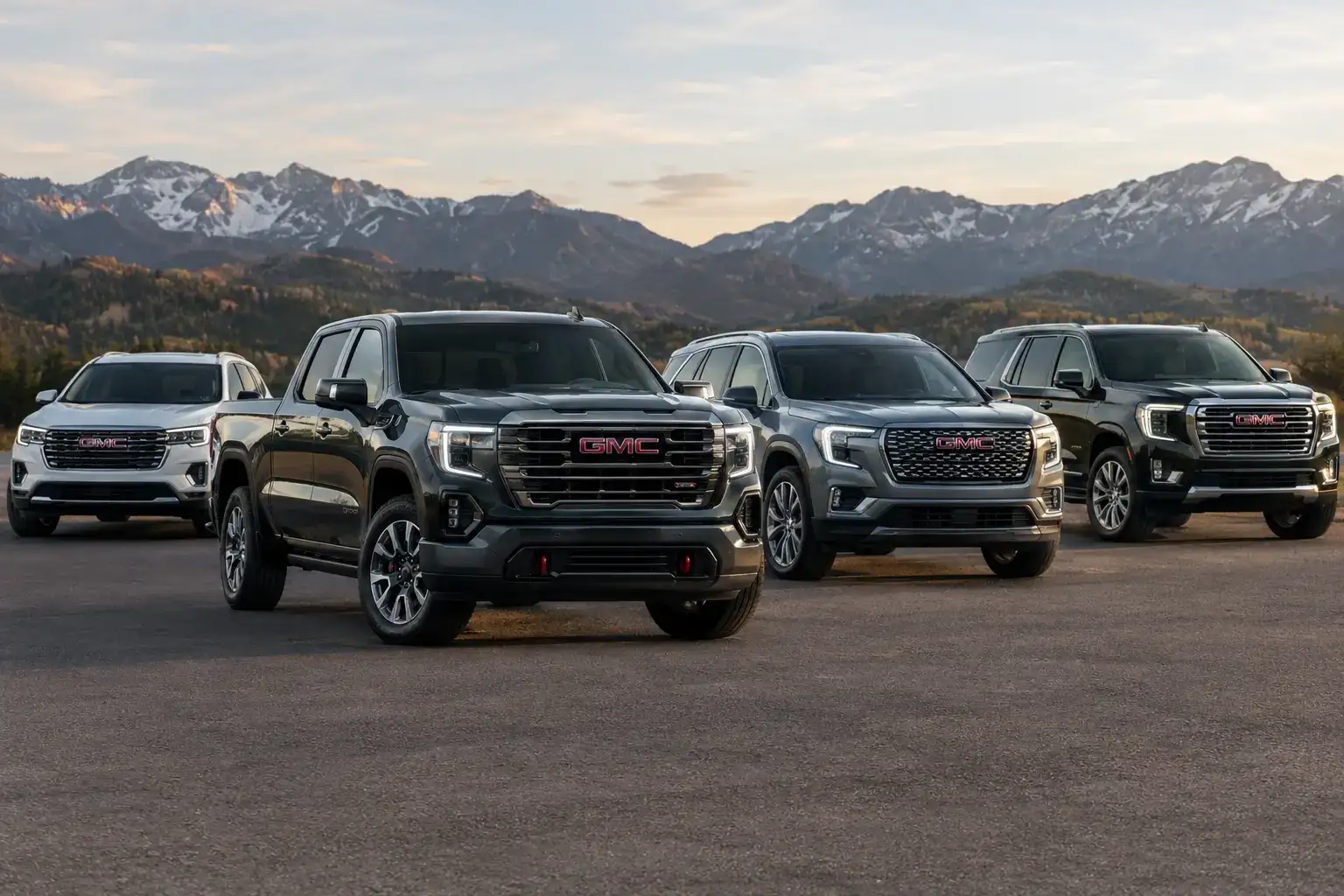
When you are shopping for a GMC, fuel economy is one of the numbers that follows you for the entire ownership period. Unlike purchase price, which you pay once, fuel cost accumulates with every drive. The GMC lineup spans a wide range, from compact SUVs that approach 30 mpg on the highway to electric trucks measured in miles of range rather than gallons. This guide organizes the EPA-estimated numbers for every current GMC configuration that carries an official rating, highlights the most efficient choices, explains how the Sierra 1500 diesel stacks up against the V8, and gives you practical driving tips for maximizing fuel efficiency in Florida conditions.
One thing worth knowing before you read the table: a single MPG figure per model is misleading. EPA ratings are specific to engine, drivetrain, and in several cases trim and tire choice. The 2026 Sierra 1500 diesel alone carries four different ratings depending on how it is built. Where that matters, the figures below are broken out.
GMC MPG by Model and Engine (Comparison Table)
The table below lists the EPA-estimated fuel economy figures for the 2026 GMC lineup, ordered from most efficient to least by combined rating.
| Model | Engine | Drive | City | Hwy | Combined |
|---|---|---|---|---|---|
| Terrain | 1.5L Turbo 4-cyl | FWD | 26 | 28 | 27 |
| Terrain Elevation | 1.5L Turbo 4-cyl | AWD | 24 | 28 | 25 |
| Sierra 1500 | 3.0L Duramax Diesel | 2WD | 23 | 28 | 25 |
| Terrain AT4 / Denali | 1.5L Turbo 4-cyl | AWD | 24 | 26 | 25 |
| Sierra 1500 | 3.0L Duramax Diesel | 4WD | 22 | 26 | 24 |
| Yukon / Yukon XL | 3.0L Duramax Diesel | 2WD | 21 | 26 | 23 |
| Sierra 1500 AT4 | 3.0L Duramax Diesel | 4WD | 21 | 24 | 23 |
| Acadia | 2.5L Turbo 4-cyl | FWD | 20 | 26 | 22 |
| Yukon / Yukon XL | 3.0L Duramax Diesel | 4WD | 20 | 24 | 22 |
| Acadia | 2.5L Turbo 4-cyl | AWD | 20 | 23 | 21 |
| Canyon | 2.7L TurboMax 4-cyl | 2WD | 19 | 23 | 20 |
| Sierra 1500 Pro | 2.7L TurboMax 4-cyl | 2WD | 18 | 21 | 20 |
| Canyon | 2.7L TurboMax 4-cyl | 4WD | 17 | 22 | 19 |
| Sierra 1500 SLE / Elevation | 2.7L TurboMax 4-cyl | 2WD | 17 | 21 | 19 |
| Sierra 1500 (SLE and above) | 5.3L V8 | 2WD | 16 | 21 | 18 |
| Yukon | 5.3L V8 | 2WD | 15 | 20 | 17 |
| Yukon | 6.2L V8 | 2WD | 15 | 20 | 17 |
| Sierra 1500 | 5.3L V8 | 4WD | 15 | 19 | 17 |
| Yukon | 5.3L V8 | 4WD | 15 | 19 | 17 |
| Sierra 1500 SLE / Elevation | 2.7L TurboMax 4-cyl | 4WD | 17 | 18 | 17 |
| Sierra 1500 (SLT and above) | 6.2L V8 | 4WD | 15 | 19 | 16 |
| Yukon XL | 5.3L V8 | 4WD | 14 | 19 | 16 |
| Yukon XL | 6.2L V8 | 2WD | 15 | 19 | 16 |
| Yukon / Yukon XL | 6.2L V8 | 4WD | 14 | 18 | 16 |
| Sierra 1500 AT4X | 3.0L Duramax Diesel | 4WD | 19 | 20 | 19 |
| EPA estimates. Actual MPG varies with driving style, payload, towing, terrain and climate control use. In Florida’s stop-and-go suburban traffic, real-world city figures often run one to two mpg below the EPA city estimate. The Sierra HD is absent on purpose, and the reason is explained below. Off-road trims and mud-terrain tires carry their own lower ratings; the Sierra 1500 AT4X diesel is included to show how far that can go. | |||||
Most Fuel-Efficient GMC: Terrain and Acadia
The GMC Terrain is the most fuel-efficient conventionally powered GMC, with up to 27 combined mpg in front-wheel-drive form. Powered by a 1.5-liter turbocharged four-cylinder engine, the Terrain delivers SUV utility while returning fuel economy figures that are competitive for the compact SUV segment. All-wheel drive costs two combined mpg, and there is a split worth knowing inside the AWD lineup: the Elevation holds a 28 mpg highway rating, while the AT4 and Denali come in at 26. Same combined figure, two mpg apart on the road where you will actually notice it.
For a Central Florida family using a Terrain primarily for commuting, school runs and weekend errands, the fuel economy advantage over a larger SUV is real money. At 27 combined mpg against the front-wheel-drive Acadia’s 22, a driver covering 15,000 miles a year at $3.50 per gallon burns about 556 gallons instead of 682. That is roughly $440 a year, and about $2,200 across five years of ownership before accounting for any fuel price increase. The gap widens further against a full-size Sierra or Yukon.
The GMC Acadia offers three-row seating with more interior space than the Terrain, and delivers up to 22 combined mpg with the 2.5-liter turbocharged four-cylinder in front-wheel-drive form, or 21 with all-wheel drive. Interestingly, all-wheel drive costs the Acadia nothing in town and three mpg on the highway, which is the opposite pattern to most of the lineup. For families who need the third row but want to keep fuel costs in check, the Acadia remains a strong choice in its segment, and the 26 mpg highway figure on a front-drive example makes it a more comfortable interstate vehicle than the combined number suggests.
GMC Sierra 1500 MPG by Engine (Including the 3.0L Duramax Diesel)
The Sierra 1500 is available with four distinct engine choices, each with a different fuel economy and capability profile. Understanding the tradeoffs helps you choose the powertrain that matches your actual use rather than the one with the best headline number.
| Engine | HP / Torque | 2WD Combined | 4WD Combined | Best For |
|---|---|---|---|---|
| 3.0L Duramax Diesel | 305 hp / 495 lb-ft | 25 mpg | 24 mpg | Long haul, high annual mileage, regular towing |
| 2.7L TurboMax 4-cyl | 310 hp / 430 lb-ft | 19–20 mpg | 17–18 mpg | Daily driving, light towing |
| 5.3L EcoTec3 V8 | 355 hp / 383 lb-ft | 18 mpg | 17 mpg | Versatile use, mid-range towing |
| 6.2L EcoTec3 V8 | 420 hp / 460 lb-ft | Not offered | 16 mpg | Maximum gas power, high towing |
| The 2.7L range reflects the difference between the Pro trim and the SLE and Elevation trims on the same engine. The 6.2L V8 is offered only with four-wheel drive on the 2026 Sierra 1500, so there is no two-wheel-drive rating for it. | ||||
The 3.0-liter Duramax diesel is the standout fuel economy choice in the Sierra 1500, and in the GMC lineup generally: at 25 combined mpg in two-wheel drive, it is the most efficient gasoline or diesel GMC of any kind except the front-wheel-drive Terrain. It delivers roughly 39 percent better combined fuel economy than the two-wheel-drive 5.3-liter V8 while producing significantly more torque, 495 lb-ft against 383. For Sierra owners who drive primarily highway miles, tow moderate loads regularly, or cover high annual mileage, the diesel’s fuel savings can offset its higher upfront cost within a few years depending on fuel prices and how the truck is actually used.
Two caveats are worth naming. Four-wheel drive costs one combined mpg, which is the smallest drivetrain penalty of any Sierra engine. Tires and off-road hardware cost considerably more: a diesel AT4 on mud-terrain tires drops to 23 combined, and the AT4X to 19. If efficiency is the reason you are buying the diesel, the build matters as much as the engine choice.
The 2.7-liter TurboMax four-cylinder is the value fuel economy choice for buyers who do not need diesel and whose towing needs stay in the light-to-moderate range. With 430 lb-ft of torque it handles small trailers capably, and in two-wheel-drive Pro form at 20 combined mpg it is the most efficient gasoline Sierra 1500 you can order, with no diesel premium and no diesel exhaust fluid to keep topped up. One thing to watch: the four-cylinder loses more to four-wheel drive than the other engines do, falling from 19 combined to 17 in SLE and Elevation form, with the highway rating dropping three mpg. For Florida buyers who commute and occasionally tow a boat or a small trailer, the TurboMax in two-wheel drive is often the smartest configuration in the lineup.
Yukon, Canyon and Sierra HD Fuel Economy
The GMC Yukon and Yukon XL are full-size body-on-frame SUVs that share their platform and powertrains with the Sierra 1500, and fuel economy reflects their size and curb weight. The 5.3-liter V8 is rated 15 city, 20 highway and 17 combined in two-wheel drive, and 15/19/17 in four-wheel drive. The 6.2-liter V8 matches it at 17 combined in two-wheel drive, which makes the larger engine a performance decision rather than a fuel one, and drops to 16 combined in four-wheel drive.
The figure most full-size SUV shoppers do not know exists is the diesel. The Yukon and Yukon XL are available with the same 3.0-liter Duramax turbodiesel as the Sierra 1500, rated 21 city, 26 highway and 23 combined in two-wheel drive, and 20/24/22 in four-wheel drive. That is six combined mpg better than the 5.3-liter V8 in the same vehicle. For a family covering 15,000 miles a year at $3.50 per gallon, the diesel Yukon saves roughly $800 annually against a four-wheel-drive V8, which is more than $4,000 across five years of ownership. If you are shopping a Yukon and nobody has shown you the diesel, it is worth driving before you decide.
The GMC Canyon, the midsize alternative to the full-size Sierra, offers better fuel economy in a smaller package: 19 city, 23 highway and 20 combined in two-wheel drive, and 17/22/19 with four-wheel drive. Off-road trims pay for their hardware, with the AT4X down at 17 combined. For buyers who do not need the Sierra’s maximum payload or towing capacity, the Canyon’s economy and more maneuverable footprint make it a compelling option, particularly in Florida where towing personal watercraft and small trailers is common.
The Sierra HD 2500 and 3500 are built for maximum capability rather than efficiency, and they carry no EPA fuel economy rating at all. Heavy-duty trucks with a gross vehicle weight rating above 8,500 pounds are exempt from EPA fuel economy testing, which is why no window sticker on a Sierra 2500HD or 3500HD shows a city and highway figure in either gas or diesel form. Any specific MPG number you see quoted for a Sierra HD is an owner estimate rather than an official rating, and real-world figures swing enormously with payload and trailer weight. What GMC does publish for the HD is capability: the available 6.6-liter Duramax diesel delivers 470 horsepower and 975 lb-ft of torque. If fuel cost on an HD matters to your business, we would rather connect you with owners running a load similar to yours than hand you a figure that was never tested.
Electric GMC Efficiency: Sierra EV and Hummer EV
GMC’s electric trucks are measured differently, and it is worth knowing which number you are being quoted. For the Sierra EV, GMC publishes GM-estimated maximum range rather than an EPA rating: up to 288 miles on the Elevation with the standard-range battery, up to 412 miles with the extended-range battery, and up to 478 miles with the max-range battery available on the AT4 and Denali. Those are manufacturer estimates, so treat them the way you would treat a combined mpg figure: a benchmark for comparison rather than a promise for your commute, and expect the number to move with air conditioning load and highway speed exactly as a gasoline figure does.
For GMC EV owners in Central Florida, charging at home is the practical advantage. Florida has a well-developed DC fast charging network along its major corridors, and GMC EVs support both DC fast charging for road trips and Level 2 AC charging for overnight home use. An owner who primarily commutes and charges at home will see per-mile energy costs substantially lower than the equivalent fuel cost, even at Florida electricity rates. The break-even comparison against a gasoline Sierra depends on your home electricity rate, your driving pattern, and how much of your charging happens on a public network rather than in your own garage, which is the variable most people underestimate. We can run that comparison with your actual numbers.
How to Get Better MPG in Your GMC (Florida Driving Tips)
Florida’s driving conditions present specific challenges for fuel economy. Year-round high temperatures mean the air conditioning runs on nearly every drive rather than seasonally, and that load is the single biggest reason a Florida owner’s real figure sits below the EPA estimate. Here are the strategies that actually move the number in this climate.
Precondition the cabin before you get in. Use remote start or cabin preconditioning so you enter a vehicle that is already cool. You then set a lower fan speed and let the climate control hold the temperature instead of fighting to pull it down. It spends a little fuel up front and takes load off the engine for the rest of the drive.
Check tire pressure monthly, cold, against the door jamb. Florida’s heat swings tire pressure more dramatically than a cooler climate does, and an underinflated tire adds rolling resistance that costs you fuel on every mile. The correct pressure is on the sticker inside the driver door jamb, not the maximum figure moulded into the tire sidewall. This is the lowest-effort, highest-return item on the list.
Use cruise control on the flat highways. Steady-speed driving is where the Sierra diesel and the TurboMax four-cylinder post their best numbers. Frequent speed changes on the highway, whether from traffic or inattention, cost more highway economy than most drivers realize, and the Turnpike and the Beachline are exactly the roads where holding one speed is easy.
Cut the idling, and let stop-start do its job. In Florida’s heat, the temptation to start the truck and let it cool for five or ten minutes before leaving is understandable, but extended idling burns fuel for zero miles traveled. Remote start with a time limit, available through the myGMC app or the factory remote, cools the cabin while the vehicle is unattended so you can drive away sooner. In traffic, the Auto Stop/Start system shuts the engine off at a standstill and restarts it as you release the brake, which is where it earns its keep at the long signals along 192 and throughout Osceola County.
Take the roof rack off when you are not using it. Roof racks, cargo baskets and similar accessories create aerodynamic drag that reduces highway fuel economy, and the penalty applies the entire time the rack is on the vehicle whether it is loaded or not. If you only need it for camping weekends, removing it during normal commuting weeks is a simple way to recover that efficiency.
Find the Right GMC Engine for Your Budget at Starling GMC St. Cloud
If you are trying to choose between the diesel, the V8 and the four-cylinder for your Sierra 1500, or deciding between the Terrain, Acadia and Canyon for daily use, Starling GMC St. Cloud has current inventory across all of those powertrains. Our team can run the fuel cost math for your specific annual mileage and typical drive type to identify which powertrain delivers the best total cost of ownership for your situation, rather than the one with the best number in a table.
For buyers financing their purchase, the powertrain choice also affects the monthly payment. The diesel carries a higher upfront cost than the V8 or the four-cylinder, which increases the financed amount and therefore the payment. Running the full five-year comparison, purchase premium set against fuel savings over your expected annual mileage, often produces a clearer answer than comparing MSRP alone. Our finance team can build that comparison with current interest rate scenarios so you see the total cost picture before committing to an engine.
We can also walk you through any available incentives on GMC EVs if you are considering the Sierra EV, along with the charging options for your home and your typical routes around St. Cloud and Osceola County.
Conclusion
GMC’s 2026 lineup covers a wide range of fuel economy, from the front-wheel-drive Terrain’s 27 combined mpg at one end to the 16 combined of a four-wheel-drive 6.2-liter V8 at the other. Within the Sierra 1500, the 3.0-liter Duramax diesel stands out at 25 combined mpg in two-wheel drive, delivering meaningful efficiency gains over the V8 while maintaining truck capability and more torque. The 2.7-liter TurboMax is a strong compromise for daily drivers who want better economy than the V8 without the diesel premium. And the figure most shoppers miss entirely: the Yukon and Yukon XL are available with that same diesel at 23 combined, six mpg better than the V8 in the same SUV. For Florida drivers weighing fuel costs across a long ownership period, understanding these numbers before purchase rather than after is the more important decision.
Frequently Asked Questions
Does the GMC Sierra diesel save money over the V8?
It depends on annual mileage, the price gap between diesel and regular gasoline, and the premium for the engine itself. The efficiency gap is real: 25 combined mpg for the two-wheel-drive Duramax against 18 for the two-wheel-drive 5.3-liter V8, roughly 39 percent. For a buyer covering 15,000 highway-weighted miles a year, that gap pays back the premium over a few years. For a lower-mileage owner doing mostly short city trips, it does not, and the V8 or the 2.7-liter four-cylinder is the better financial answer. Our team can run the numbers against your actual mileage before you commit to a powertrain.
What is the most fuel-efficient GMC truck?
The Sierra 1500 with the 3.0-liter Duramax turbodiesel in two-wheel drive, at 23 city, 28 highway and 25 combined mpg. That is also the most efficient gasoline or diesel GMC of any kind except the front-wheel-drive Terrain. Among gasoline trucks, the 2.7-liter four-cylinder Sierra 1500 Pro in two-wheel drive leads at 20 combined.
What is the most fuel-efficient GMC SUV?
The front-wheel-drive Terrain at 26 city, 28 highway and 27 combined mpg. Among the full-size SUVs, the answer surprises most shoppers: the Yukon and Yukon XL are available with the 3.0-liter Duramax turbodiesel, rated 21 city, 26 highway and 23 combined in two-wheel drive. That is six combined mpg better than the same Yukon with the 5.3-liter V8, in a vehicle most buyers assume only comes with a V8.
Why is there no MPG rating for the Sierra HD?
Because the EPA does not test it. Heavy-duty trucks with a gross vehicle weight rating above 8,500 pounds are exempt from EPA fuel economy testing, which is why no window sticker on a Sierra 2500HD or 3500HD carries a city and highway figure in either gas or diesel form. Any specific MPG number quoted for a Sierra HD is an owner estimate rather than an official rating, and real-world figures vary enormously with payload and trailer weight. If fuel cost on an HD matters to your business, ask us to connect you with owners running a similar load rather than relying on a published figure.
Does using the AC really hurt fuel economy that much?
Yes, and in Florida it is the main reason a real figure sits below the EPA estimate. Air conditioning adds engine load that can cost a few mpg, with the penalty at its worst on a hot afternoon with the system set to maximum and recirculate. It is a genuine cost of driving in this climate rather than something to drive around, which is why preconditioning the cabin before you get in does more for your average than any driving technique.
Does 4WD reduce fuel economy compared to 2WD?
Yes, and the size of the penalty varies more than you would expect. On the 5.3-liter V8 Sierra 1500 it costs one combined mpg, 18 to 17. On the 2.7-liter four-cylinder in SLE and Elevation form it costs two combined and three on the highway, 19 to 17. On the Duramax it costs one, 25 to 24. Tires matter as much as the drivetrain: a diesel AT4 on mud-terrain tires drops to 23 combined and the AT4X to 19. On most current GMC trucks and SUVs with automatic four-wheel drive, the system runs in two-wheel drive or an automatic mode during normal driving and engages full four-wheel drive on demand, which mitigates part of the penalty compared with older systems that ran in four-wheel drive at all times.

0 comment(s) so far on GMC Fuel Economy: Real MPG Across the 2026-2027 Lineup