

GMC Dashboard Warning Lights Explained: What Each One Means
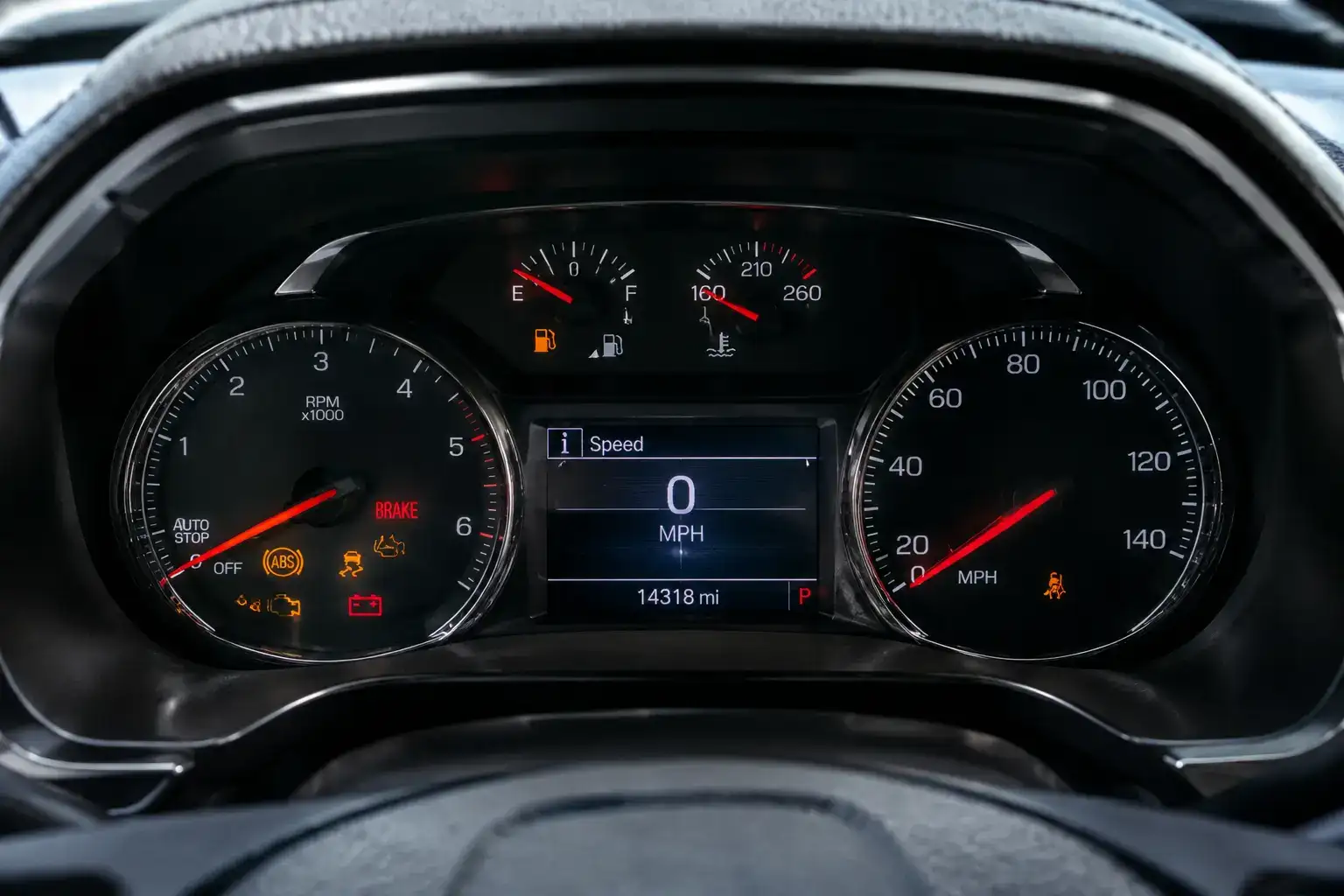
A warning light on your GMC dashboard is the vehicle’s way of telling you something needs attention. Some lights are informational, some call for service soon, and some mean you should pull over immediately. Knowing the difference can save you from a costly repair or, in the case of the most serious warnings, prevent an engine failure or safety incident. This guide covers the color system GMC uses, explains the most common warning lights you are likely to encounter, and tells you specifically when to stop driving.
GMC Warning Light Colors: What Red, Amber, Green, Blue & White Mean
GMC uses a three-color system across its dashboard warning lights, and the color tells you the urgency level before you even read what the light says.
| Warning Light | Color | What It Means | What to Do |
|---|---|---|---|
| Check Engine (engine outline) | Amber | Engine or emissions system fault detected and stored as a code | Solid: schedule service. Flashing: active misfire, get to a shop the same day |
| Service Vehicle Soon (wrench) | Amber | Fault in a vehicle system other than the engine emissions controls | Schedule service; mention if the vehicle also felt down on power |
| Oil Pressure | Red (oil can) | Oil pressure critically low | Stop engine immediately; check oil level |
| Engine Temperature | Red (thermometer) | Engine overheating | Stop and allow engine to cool; do not open radiator cap |
| Battery / Charging | Red (battery) | Charging system not working | Limit electrical use; get to a shop before the battery dies |
| Tire Pressure (TPMS) | Amber | One or more tires 25% or more below the recommended pressure | Inflate to the door jamb figure, checking the tires cold |
| StabiliTrak Off / Traction Control Off | Amber | Stability or traction control switched off, or briefly intervening | Nothing, unless you did not switch it off yourself |
| Service StabiliTrak | Amber | Stability control system fault | Schedule service; the system may not intervene when needed |
| ABS Warning | Amber | Anti-lock brake system fault | Normal brakes still work; schedule ABS service |
| Brake Warning | Red | Brake fluid low or parking brake applied | Confirm the parking brake is released; check brake fluid |
| Transmission Temperature | Red | Transmission overheating | Pull over; idling in neutral cools it faster than switching off |
A red light is always the most urgent. If you see a red warning light you have not seen before, do not assume it will resolve on its own. Pull over safely and consult your owner’s manual or call Starling GMC St. Cloud’s service line for guidance before continuing to drive.
The Most Common GMC Dashboard Lights (and What to Do)
The following lights appear most frequently on GMC trucks and SUVs. Some are routine maintenance indicators, others signal mechanical issues that need prompt attention.
| Warning Light | Color | What It Means | What to Do |
| Check Engine (Wrench/Engine) | Yellow or Red | Engine or emissions system fault detected | Yellow: schedule service. Red or flashing: stop driving soon |
| Oil Pressure | Red (oil can) | Oil pressure critically low | Stop engine immediately; check oil level |
| Engine Temperature | Red (thermometer) | Engine overheating | Stop and allow engine to cool; do not open radiator cap |
| Battery / Charging | Red (battery) | Charging system not working | Limit electrical use; get to a shop before battery dies |
| Tire Pressure (TPMS) | Yellow | One or more tires 25%+ below spec | Check and inflate tires; reset TPMS if needed |
| StabiliTrak Off | Amber | Electronic stability control disabled | Lights briefly when system is manually turned off |
| Service StabiliTrak | Amber | Stability control system fault | Schedule service; system may not intervene if needed |
| ABS Warning | Amber | Anti-lock brake system fault | Normal brakes still work; schedule ABS service |
| Brake Warning | Red | Brake fluid low or parking brake on | Check brake fluid; confirm parking brake is released |
| Transmission Temperature | Red | Transmission overheating | Pull over and allow vehicle to idle or stop engine |
Engine, Oil Pressure & Temperature Lights
Check Engine Light
The check engine light is the most misunderstood warning light on any vehicle. It does not necessarily mean the engine is about to fail. It means the engine control module has detected a fault outside of normal parameters and stored a diagnostic trouble code. The fault can range from a loose gas cap triggering an evaporative emissions code to a misfiring cylinder. A solid amber check engine light calls for a service appointment but is not an emergency. A flashing check engine light indicates an active misfire that can damage the catalytic converter: reduce speed, avoid hard acceleration, and get to a shop the same day.
Oil Pressure Warning
A red oil pressure warning light is one of the most serious alerts your GMC can show. Low oil pressure means the engine’s moving parts are not receiving adequate lubrication, and continued operation can cause catastrophic internal damage within minutes. If this light comes on while driving, pull over safely as soon as possible and turn off the engine. Check the oil level on the dipstick. If the oil level is normal and the light is still on after restarting, do not drive the vehicle. Have it towed and inspected.
Engine Temperature Light
A red engine temperature light means the coolant temperature has exceeded safe operating limits. Overheating can warp cylinder heads, blow head gaskets, and cause engine damage that costs thousands of dollars to repair. Pull over safely, turn off the engine, and allow it to cool for at least thirty minutes before checking the coolant level. Never open the radiator cap or coolant reservoir cap on a hot engine. Call roadside assistance if the coolant level appears normal and the engine temperature does not return to normal range.
StabiliTrak, ABS & Traction Control Lights
These three systems, StabiliTrak electronic stability control, the Anti-Lock Brake System, and Traction Control, work together to keep the vehicle stable and controllable in challenging conditions. When any of them has a fault, the relevant light illuminates on the dashboard.
StabiliTrak and Traction Control
A brief StabiliTrak light during driving often means the system actively intervened to correct a slide or loss of traction, which is normal operation. A steady Service StabiliTrak message means the system has detected a fault and may not be available to help if you lose control. Schedule a service appointment. Normal braking and steering still function, but the safety net provided by electronic stability control is reduced or absent.
ABS Warning Light
An ABS warning light means the anti-lock brake system has detected a fault. Your conventional brakes still work normally in most cases. The difference is that ABS prevents the wheels from locking under hard braking to help you maintain steering control during an emergency stop. Without ABS functioning correctly, hard braking may lock the wheels and reduce your ability to steer around an obstacle. Schedule service; do not ignore this light if you drive in traffic regularly.
TPMS and Tire-Related Lights
The Tire Pressure Monitoring System light is one of the most commonly triggered warnings on any GMC. Florida’s temperature swings, particularly between air-conditioned garages and outdoor summer heat, cause tire pressure to fluctuate. Cold weather drops pressure; hot asphalt and midday heat raises it. The TPMS light activates when any tire reads 25 percent or more below the recommended pressure.
The recommended tire pressure for your specific Sierra, Terrain, Acadia, or Yukon is listed on a sticker inside the driver door jamb, not on the tire sidewall. The sidewall pressure listed on the tire is a maximum cold inflation pressure, not the recommended operating pressure. Using that number will overinflate the tire. Always use the door jamb sticker for your inflation target.
After inflating all four tires to the correct pressure, the sensors report as you drive and the light typically goes out on its own within a few minutes of normal driving. If it stays on, the usual causes are a sensor that needs relearning after a tire rotation, a failed sensor, or a slow leak. The relearn procedure differs by model and model year, so check the Tires section of your owner’s manual or have our service department read the system, which takes a few minutes.
When a Warning Light Means Stop Driving Now
Most warning lights allow you to complete your current trip and schedule service. A handful require immediate action. Stop driving as soon as safely possible, without pulling into traffic, if you see any of the following:
Red oil pressure warning: engine damage can occur within minutes of operation with low oil pressure. Red engine temperature warning: overheating causes permanent damage quickly. Red battery with a car that feels like it is losing power: the battery may have only minutes of operation left if the alternator has failed. Smoke coming from under the hood in combination with any warning light: pull over immediately and exit the vehicle. Red brake warning light combined with soft or spongy brake pedal: brake fluid loss can lead to brake failure.
For any of these situations, pull over safely, turn on your hazard lights, and call roadside assistance or Starling GMC St. Cloud’s service department for guidance. Attempting to drive through a critical warning light to reach a service center is almost always more damaging and more expensive than stopping and calling for help.
Warning Lights That Are Commonly Misunderstood
Several GMC warning lights generate more calls to service departments than others because their meaning is not immediately obvious from the icon or because they appear unexpectedly under normal driving conditions.
The Service Trailer Brake System light appears on Sierra and Yukon models with integrated trailer brake controllers and illuminates when the system detects a connection issue with a trailer’s brake system or when no trailer is connected but a fault exists in the controller. If you see this light without a trailer connected, it does not indicate an emergency, but it does need service attention before your next towing trip.
The Lane Keep Assist or Lane Departure Warning light may appear when the system is unable to detect lane markings, a common occurrence on Florida roads after heavy rain, in construction zones, or on older roads with faded paint. The light in this case is informational: the system has temporarily suspended operation, not failed. It should return to normal once lane markings are visible again.
The Reduced Engine Power message appears on GMC vehicles when the engine control module has limited throttle response as a protective measure following a detected fault. The vehicle will still move but will feel sluggish, and maximum speed may be limited. Unlike a check engine light, which may go unnoticed for days, Reduced Engine Power is an immediate performance change the driver will feel. This message calls for service promptly, though the vehicle can typically be driven carefully to a service facility.
The Auto Stop / Start Active or Auto Stop / Start Unavailable messages relate to GMC’s engine stop-start system, which shuts off the engine at traffic stops to save fuel and restarts it automatically when you release the brake. The Unavailable message appears when the battery or cabin temperature conditions do not support the feature, not because something is broken. On a cold start in winter or after extended air conditioning use on a very hot Florida afternoon, the system may temporarily disable itself until conditions normalize. This is by design. If you find the stop-start behavior disruptive, most Sierra and Yukon trims offer a button to disable it for the current drive cycle, typically located on the center console or HVAC panel.
Diagnose a Warning Light at Starling GMC St. Cloud
If a warning light is on in your GMC and you are not sure what it means or how urgently it needs attention, Starling GMC St. Cloud can help. Our service department uses GM’s diagnostic equipment to read the stored trouble codes associated with any active warning light and give you a clear explanation of what the code means and what the repair requires.
For yellow lights that call for service, we can get you scheduled quickly. For red lights that have you concerned about driving, call our service advisors for guidance on whether it is safe to drive in. We can also pull up your vehicle’s service history to help identify whether a recurring code is a known issue or something new.
Conclusion
GMC’s color-coded dashboard warning system gives you an immediate sense of urgency before you even identify the specific light. Red means stop, yellow means schedule service, and green means a system is active. The most critical lights to know are the oil pressure warning, the engine temperature warning, and a flashing check engine light, all of which call for immediate action to prevent serious damage. For any light that appears unexpectedly or that you cannot identify from your owner’s manual, Starling GMC St. Cloud’s service team can scan your vehicle and give you a clear answer within minutes.
Frequently Asked Questions
Can I drive with the check engine light on?
If the light is solid yellow, you can typically complete your current trip and schedule service soon. If the check engine light is flashing or red, reduce speed and avoid hard acceleration; get to a service shop the same day. A flashing light indicates an active misfire that can damage the catalytic converter.
Will a GMC dashboard light turn off on its own?
Some lights, such as the TPMS light after you inflate a tire to the correct pressure, will turn off on their own once the condition is corrected. Others, including the check engine light, require the stored diagnostic code to be cleared by a scan tool after the underlying problem is fixed. The light will not go off simply because the issue stopped occurring.
How do I reset the tire pressure light on a GMC?
Inflate all four tires to the pressure on the driver door jamb sticker, checking them cold, then drive normally. The system reads the sensors as you go and the light typically clears within a few minutes. If it stays on, the cause is usually a sensor that needs relearning after a rotation, a failed sensor or a slow leak, and the relearn procedure differs by model, so check the Tires section of your owner’s manual or have us read the system.
Is it safe to drive with the ABS light on?
Conventional brakes still function when the ABS warning light is on. However, in a hard braking emergency, the wheels may lock and you will lose some steering control. It is safe to drive short distances to reach a service center but not advisable to continue long-term driving with the ABS system faulted, especially in wet conditions.
Why does my GMC say Change Engine Oil Soon?
GMC’s Engine Oil Life System estimates how much life your oil has left from how the vehicle is actually driven, not from mileage alone, and it displays a Change Engine Oil Soon message when the oil is due. GMC allows roughly 600 more miles after that message appears before the oil and filter should be changed, so book the appointment rather than treating it as urgent. Trust the message over a round number on the odometer: it reflects your driving conditions.

0 comment(s) so far on GMC Dashboard Warning Lights Explained: What Each One Means